
Art Dubai Opinion Piece: What 20 Years of Art Dubai Taught Me About How We Value Art in Commercial Design
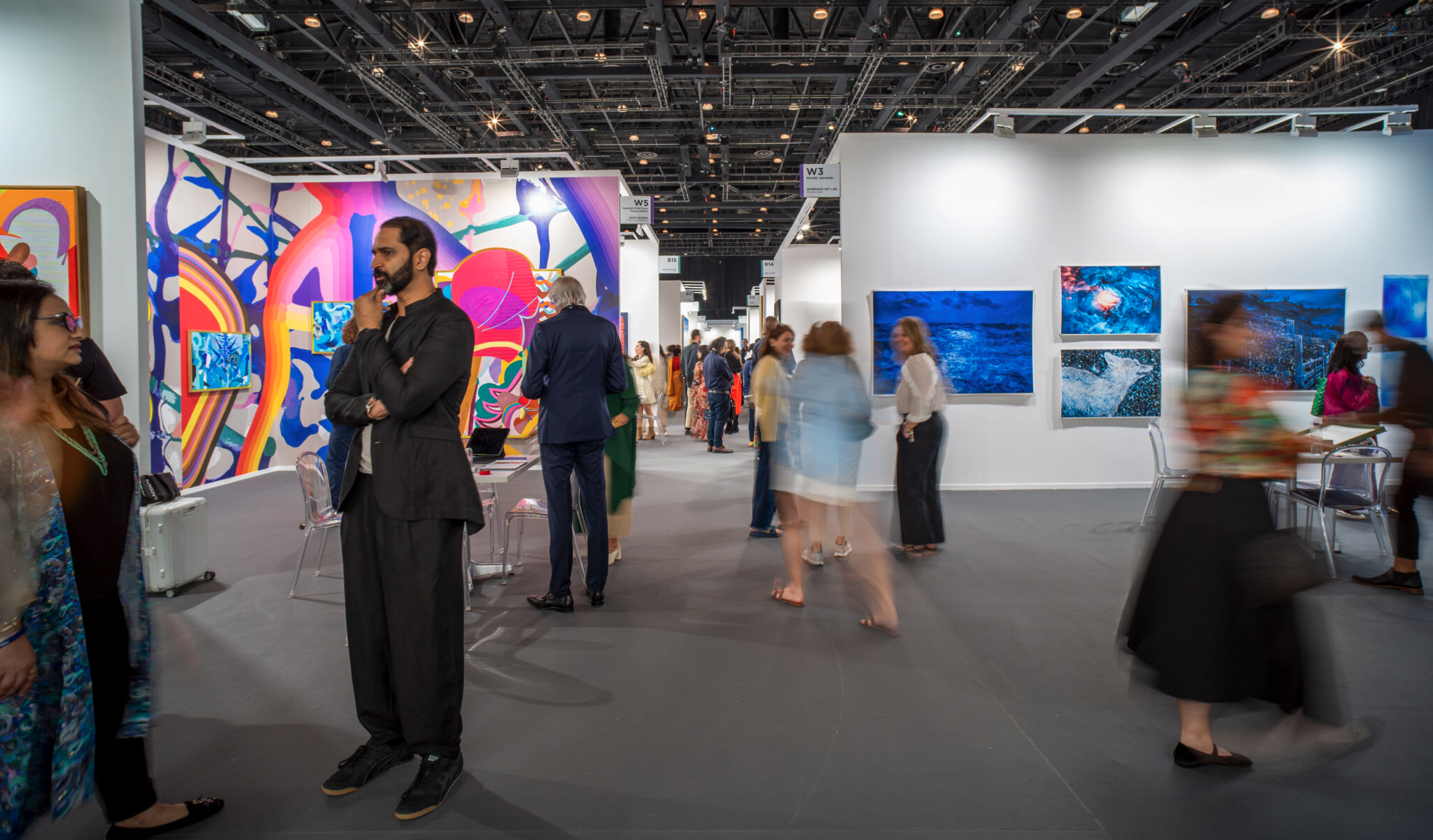
What 20 Years of Art Dubai Taught Me About How We Value Art in Commercial Design
By Rachael Brown, Creative Director & Co-Founder, Capsule Arts
Dubai has been my home for 18 years, and as we approach the 20th edition of Art Dubai this May, it strikes me that I haven’t missed a year yet. It’s rare to witness first-hand how an event such as this evolved from its early days through to this level of maturity and the impact it’s had on a city and wider region.
Art Dubai had a very different energy at the start. It was glamorous, social, and undeniably attractive to a global audience eager to mix art with pleasure. There was a sense of excitement and discovery, but also a sense of spectacle. What I’ve always respected is how quickly that shifted. Having knuckled down, it deliberately became a platform for meaningful discourse about art from the MENASA region, positioning itself on a global stage while remaining geographically grounded. From that point on, Art Dubai became our educator and mentor - a connector, a meeting place, and somewhere conversations could happen that simply weren’t happening elsewhere. This move is what gave it its identity.
Over time, the fair has expanded in depth and scale to include halls dedicated to Modern art, and later Digital. Throughout the past 20 years, Dubai hasn’t had an art museum, so for many of us, Art Dubai became that space to be inspired, and to connect with art trends from all over the world. However, since the nature of an art fair is to sell, you inevitably see the works through a different lens, whether it’s subconscious or not. The idea of buying the works on display, or art as a commodity, naturally raises expectations for art in the public realm and commercial design, in a region brimming with development.
I’ve seen the impact of this first-hand in my work. Clients today reference artists, installations, and moments they’ve experienced at the fair. I credit Art Dubai in shaping taste and art appreciation, giving people the confidence to engage with art not as something distant or intimidating, but as something relevant to their lives and their spaces. It has also influenced how institutions, governments, and developers in the region view arts patronage. They understand the cultural weight art has, and the economic value it gives to how a city is positioned, experienced, and remembered.
That’s important when you look at what has happened over the past decade with artists from the region. We now have a strong group of Emirati artists gaining international recognition, both emerging voices and those who have been deserving of that platform for generations. At the same time, we’ve seen change at a grassroots level, with artists moving from making work alongside full-time jobs, to becoming full-time licensed practitioners. Initiatives like the artist Golden Visa reinforce that this sector is being taken seriously, and rightly so. Art is no longer peripheral; it is part of the cultural and economic fabric of Dubai.
And yet, despite all of this progress, there is still a disconnect that I come up against time and time again, particularly when it comes to commercial projects, and most notably in hospitality. There is ambition and respect when art is commissioned for the public realm, cultural programming, or corporate collections. The artist is afforded time and budget for creative expression, research and development and skilled execution. When we move to art for commercial design those two factors are crunched and the integrity and quality of the art suffers.
This is where the current design conversation becomes impossible to ignore. We’re talking about narrative-led spaces, craftsmanship, expressive layering, cultural experience, and a strong sense of place. These are not passing trends. They are responses to a more competitive market where differentiation is everything. But all of these ideas rely on one thing: depth. You cannot create a meaningful narrative without content, you cannot achieve a true sense of place without cultural context, and you cannot build expressive, layered environments without something to anchor them. That anchor is art.
At the same time, the direction of design itself is pushing us toward something more considered. There is a clear move away from trend-led decoration and towards work that feels timeless. There’s an appetite to see the artist in the work, to see craftsmanship, materiality, the hand, the process. Art is being called upon to stand on its own, not to fill a wall, but to define a space. The challenge is in how it is delivered and for that to change it requires a different level of recognition and a different level of investment. Art needs to be viewed as an asset and not an expense.
Those delivering projects know this, from designers through to operators and even procurement teams, but ask yourself if you're advocating for art in a way that can effect change?
One issue I’ve identified is that inter-department co-ordination is not happening. Many of the large developments in the region are led by government or semi-government organisations that often have an arts and culture department, yet their involvement with the team leading hospitality is minor if at all. Collaboration in this area would aid the strategy for budgets and planning from within.
Another idea to close the gap between cultural ambition and commercial delivery, is to look at the role of government in enabling that change. We’ve seen strong support for the arts at a policy level, but there is an opportunity to go further by supporting developers. Incentives such as tax breaks tied to cultural investment could fundamentally change how art is prioritised within commercial projects. If art is recognised not just as a cultural asset but as a contributor to economic value, then it needs to be supported as such within the development process.
As Art Dubai reaches its 20th edition, this moment of reflection brings with it responsibility. The fair has done an extraordinary job of building awareness, shaping taste, and creating a platform for artists from this region to be seen globally. The next step is ensuring that this cultural progress is embedded into the spaces we create every day. Because for most people, art isn’t experienced in a fair setting. It’s experienced in the environments they move through: hotels, restaurants, hospitals, offices, and public spaces.
At Capsule Arts, we talk about creating space to inspire, but inspiration doesn’t come from aesthetics alone. It comes from intention, from investment, and from a willingness to treat art not as an afterthought, but as something essential. As you walk through Art Dubai this week and experience the work on show, it’s worth considering how that same sense of authenticity can translate into the spaces you’re creating. Because the next step isn’t just appreciating art, it’s advocating for it within your own projects, and giving it the structure it needs to truly make an impact.